Learn to build web applications with a React or Angular interface, a Java and Spring Boot backend, REST APIs and a MySQL database. Hejex Technology offers Java Full Stack Developer training in Chennai through classroom and live online sessions, with 350+ hours of practical training completed in about 4 to 5 months on a weekday batch.
Start with web fundamentals and Core Java, then work through JDBC, Spring Boot and REST APIs before connecting everything to a frontend. Build the core of each project yourself, then learn to add Generative AI features with Spring AI.
Java full stack development connects a browser interface to a Java backend and a relational database. In this course, you follow a request from a React or Angular form to a Spring Boot REST controller, through a JPA repository into MySQL, and back to the screen as JSON. This focused learning path is for learners who want to build complete web applications in the Java ecosystem.
Each of these learners trained in a batch of five, built their projects with Java and Spring Boot, and went through mock interviews before their placement drives.
The Java track is built around one goal: a working Spring Boot and React application you can explain layer by layer in an interview.
Only 5 students per batch. Get direct attention, daily doubt-solving and mentorship.
Every enrolled student gets resume preparation, aptitude training, mock interviews, communication practice, LinkedIn guidance and interview scheduling.
Build Spring Boot and React applications such as a student Q&A portal, a task manager and an expense tracker, and deploy them with Git and GitHub.
Choose a weekday batch (Monday to Saturday) or a weekend batch (Saturday and Sunday), in class or live online.
Receive a Hejex Technology course completion certificate after meeting the course requirements.
Learn from trainers with hands-on experience in Java, Spring Boot, React and REST API development. Your trainer reviews your code and debugs with you during class.
Fees range from ₹19,000 to ₹40,000 depending on the batch and current offers.
Flexible instalment plans are available for the course fee.
The Java Full Stack Developer Course at Hejex Technology costs ₹19,000 to ₹40,000 depending on the batch and current offers. It includes 350+ hours of hands-on training over approximately 4 to 5 months on a weekday batch, with classroom and live online options.
| Course name | Java Full Stack Developer Course with Generative AI |
|---|---|
| Course fees | ₹19,000 to ₹40,000, depending on the batch and current offers |
| Course duration | 350+ hours of training; approximately 4 to 5 months on a weekday batch |
| Class schedule | Weekday batches (Monday to Saturday) and weekend batches (Saturday and Sunday) |
| Batch size | Maximum 5 students per batch |
| Training mode | Classroom & Live Online Training |
| Projects | 5+ hands-on projects, each with an AI feature added after the core build |
| Technologies covered | HTML, CSS, Tailwind CSS, JavaScript, TypeScript, React, Angular, Core Java, JDBC, Spring Boot, JPA, REST APIs, MySQL, Postman, Git, GitHub and Spring AI |
| Who can join | Freshers, students, professionals & career switchers |
| Prerequisites | No prior coding experience is required. Basic computer knowledge is enough to get started. |
| Placement support | 100% Placement Support: every enrolled student receives resume reviews, aptitude practice, GitHub setup, communication sessions, mock interviews and interview scheduling |
| Certification | Hejex Technology course completion certificate |
| Location | Hejex Technology, Pallavaram, Chennai, Tamil Nadu |
| Enquiries | +91 84383 87098 |
Course fees and batch details verified on . Fees may vary depending on the current batch and offers.
Choose classroom or live online Java full stack training. Both follow the same syllabus, projects and batch dates.
Join live instructor-led sessions from anywhere and write Java, Spring Boot and React code alongside your trainer, with live doubt-clearing during sessions.
Attend our Java Full Stack Developer Course in Chennai in person at Pallavaram, with your trainer reviewing your Spring Boot controllers, JPA entities and React screens at your desk.
Prepare for Java developer interviews with resume building, project walkthrough practice, Core Java and Spring Boot technical questions, aptitude practice and mock interviews.
Talk to Our Admissions Team
Call us or request a call back for fee details, the next batch start date and weekday or weekend batch options.
Java Full Stack learners start on the Full Stack batch dates below.
| Start Date | Class Schedule | Mode of Training | Book Slots |
|---|---|---|---|
| Monday – Saturday | Classroom/Online |
|
|
| Saturday – Sunday | Classroom/Online |
|
|
| Monday – Saturday | Classroom/Online |
|
|
| Saturday – Sunday | Classroom/Online |
|
Hejex Technology's Java Full Stack Developer Training in Chennai shows you how a modern web application is built across the frontend, the Java backend, the API layer and the database. You work with HTML, CSS, JavaScript, TypeScript, React and Angular on the frontend, and Core Java, JDBC, Spring Boot, JPA and REST APIs on the backend, with MySQL, Postman, Git and GitHub throughout. Each technology is learnt by using it inside a working application rather than as theory on its own.
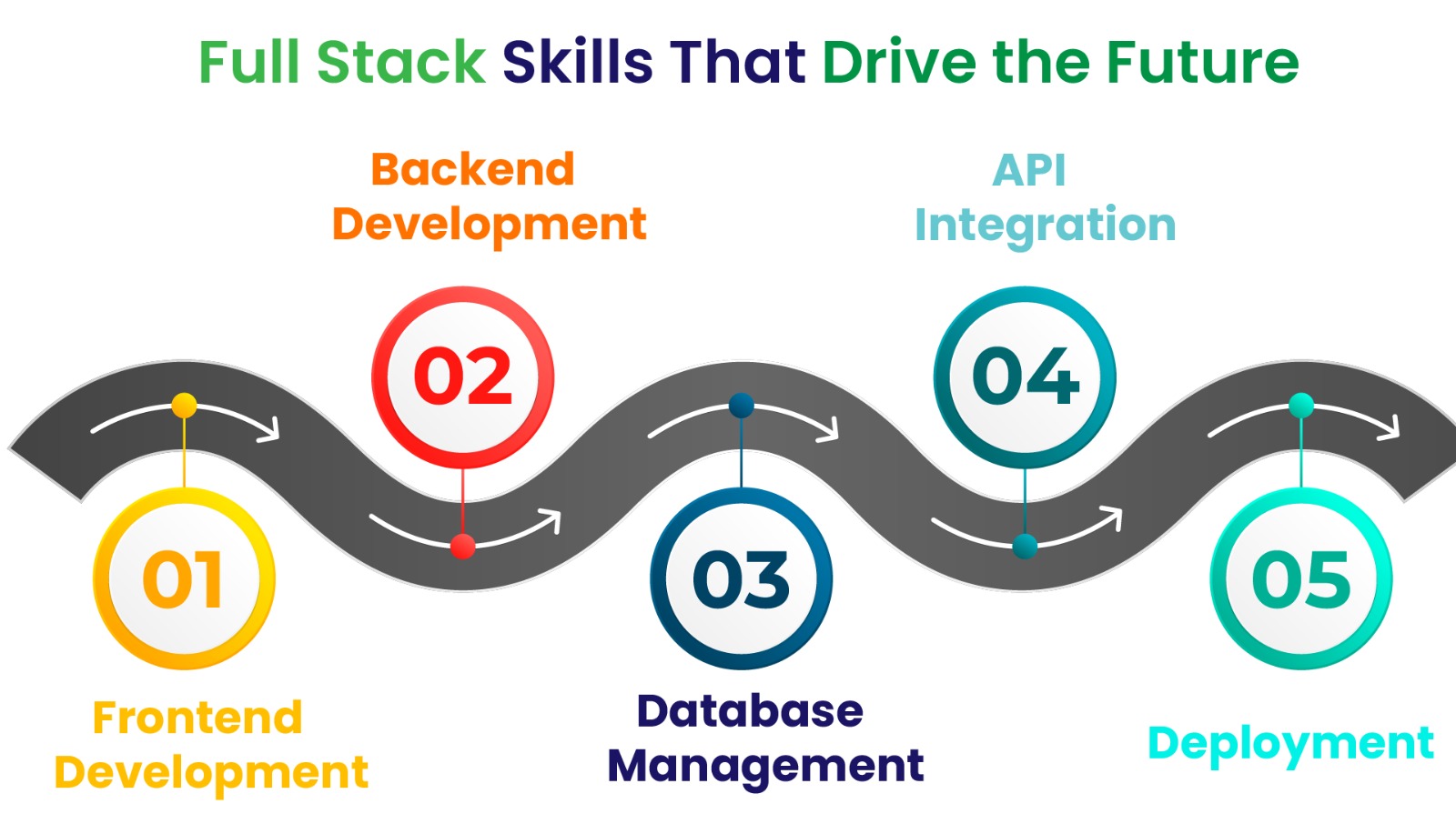
You build each application's core features yourself first: JPA entities and repositories, Spring Boot controllers and services, REST endpoints tested in Postman, and the React or Angular screens that consume them. JDBC comes before Spring Boot, so you understand what the framework is doing for you. Only once the core works is Generative AI introduced, as a feature you add with Spring AI, such as a chatbot or a content assistant. This order keeps your Java fundamentals strong, so you can explain and defend every layer of your project in interviews.
Build the structure, layout and styling of web pages, including responsive layouts with Tailwind CSS.
Learn browser programming, modern ES6+ syntax and typed TypeScript code, and call your Spring Boot APIs asynchronously.
Build component-based interfaces in React and Angular, manage forms and state, and connect screens to REST APIs.
Write object-oriented Java with collections, exceptions and streams, then build controllers, services and repositories in Spring Boot.
Connect Java to MySQL with JDBC and PreparedStatement, then model tables as JPA entities and query them through repositories.
Design endpoints with the right HTTP methods, status codes and JSON responses, and test them in Postman before the frontend uses them.
The course suits beginners with no coding experience, college students and fresh graduates building a portfolio for their first developer role, working professionals adding Java and Spring Boot to their skills, and career switchers moving into software development from another field. Weekend batches make it easier to fit around a job.
No prior coding experience is required; basic computer knowledge is enough to start. If you already know some programming, you'll move through the fundamentals faster and spend more of your time on Spring Boot, APIs and integration.
This Java Full Stack Developer syllabus covers frontend development, Core Java, JDBC, Spring Boot, REST APIs, databases, full stack integration, deployment, and Generative AI concepts. The modules are structured to help learners progress from web development fundamentals to building and integrating Java-based full stack applications.
If you want to develop deeper expertise in React and modern front-end development, explore our React JS Training in Chennai.
Trainers on this course have practical experience in Java, Spring Boot, REST APIs, databases and React. Sessions combine concepts with coding practice, project implementation and interview preparation.
| Attribute | Details |
|---|---|
| Trainer Name | Ramkumar |
| Industry Experience | 8+ Years in Full Stack Development |
| Core Technologies | Java, Spring Boot, React, MySQL and REST APIs |
| Current Role | Lead Full Stack Engineer |
| Companies Worked | TCS, Infosys, Zoho, Cognizant |
| Students Trained | 9,300+ Students |
| Training Mode | Online & Classroom |
| Specialization | Java, Spring Boot, REST APIs, React JS & MySQL |
See how a Spring Boot and React class runs before you enrol. Book a free demo and meet the trainer.
Classroom & Live Online • Weekday & Weekend Batches
The course includes 5+ hands-on projects. The examples below show the kind of applications you build with Java, Spring Boot, React and MySQL; your final project scope is agreed with your trainer. Each project starts as a working application you build yourself, and the AI feature comes last.
Build a question-and-answer portal with React, Spring Boot, REST APIs and MySQL, with an AI assistant that drafts answers to student questions.
Develop a task manager with React, Spring Boot, REST APIs and MySQL that suggests priorities and breaks complex tasks into smaller steps.
Create an interview practice platform with Spring Boot and React where users submit answers and receive AI feedback on strengths, gaps and areas for improvement.
Build a recruitment application with Spring Boot, REST APIs and a database where recruiters upload job descriptions and resumes, and AI compares skills to produce a ranked shortlist.
Develop an expense manager with React, Spring Boot, REST APIs and MySQL that categorises transactions, flags unusual spending and writes monthly summaries.
Build an EdTech application with course enrolment, lessons, quizzes and progress tracking on Spring Boot and React, then add AI-generated quizzes and personalised learner feedback.
Understand how the Java stack fits together, how this course differs from our other tracks, and what to practise before applying for development roles.
React or Angular runs the interface in the browser. Spring Boot runs on the server: a controller receives the request, a service applies the business logic, and a JPA repository reads or writes MySQL. The controller returns JSON, which the frontend displays.
Yes. Java handles the backend in this course, while JavaScript and TypeScript power the browser side through React and Angular. Practise both by submitting a form to a Spring Boot endpoint and showing its validation errors on screen.
JDBC is the low-level Java API for running SQL: you open a connection, write the query and map each row yourself. JPA in Spring Boot maps tables to entity classes and gives you repositories for common queries. The syllabus covers JDBC before Spring Boot, so you understand what JPA is doing for you.
The syllabus covers both. React appears widely in fresher job postings, while Angular is common in established enterprise codebases. Learn both, then pick one to go deep on for your final project so you can defend it confidently in interviews.
If you mainly want to learn the Java language, see our Java Training in Chennai. This course uses Java as the backend of complete web applications, together with Spring Boot, REST APIs, React or Angular and MySQL, and ends with a deployed full stack project.
Yes, especially if you are aiming at large service companies, where Java with Spring Boot appears often in fresher hiring. Java takes a little longer to start with than some languages, but its strict structure makes it easier to read and debug larger applications later.
Java with Spring Boot appears more often in large service-company hiring, while Python with Django shows up more in product companies, startups and data or AI-related work. Compare the Python Full Stack course, or read our guide on Java vs Python vs MEAN Stack for freshers.
Show a working interface, REST endpoints with proper status codes, JPA entities with clear relationships, input validation, JUnit tests and useful error handling. Include a deployment link where available and a README explaining setup and the decisions you made.
The skills support applications for Java developer, Spring Boot developer, backend developer, full stack developer and associate software engineer roles. Titles and responsibilities vary by employer; compare each job description with your project experience.
Interviewers ask you to explain your code, debug it and defend your design choices. Building the core application yourself gives you that understanding. Once it works, you learn to add AI features with Spring AI, which is how AI is used in real Java applications.
| Path | Backend focus | Explore |
|---|---|---|
| Java Full Stack | Core Java, JDBC, Spring Boot and JPA | This dedicated Java course |
| Python Full Stack | Python, Django and Django REST Framework | Python Full Stack course |
| Full Stack overview | Compare all development tracks | Full Stack Developer training |
Classroom batches run at our Pallavaram centre in Chennai. If travelling to Pallavaram isn't practical, the same course runs as live instructor-led online training with the same syllabus and batch dates.